NJ Sump Works Blog · Published September 20, 2026
5 Inches of Rain in 3 Hours — and Some Sump Pumps Never Had a Chance
Short answer: last Sunday's "once-in-a-generation" deluge was the hardest real-world test North Jersey sump pumps have faced in years — and plenty of them failed. With more rain falling today, here's why pumps quit when it counted and the 5-minute test to run before tonight.
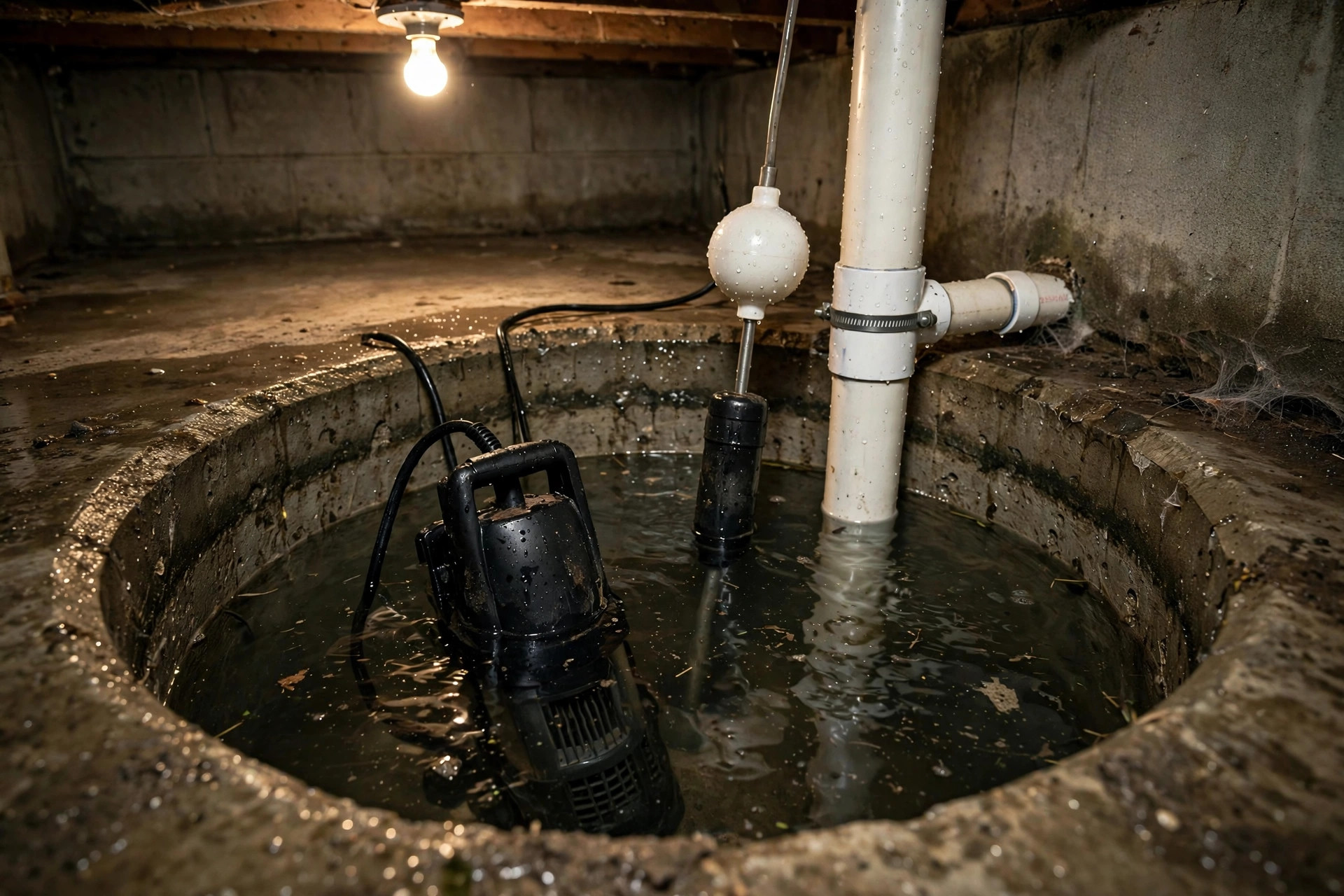
If you live in Paterson, Wayne, Little Falls, or anywhere along the Passaic River, you already know what happened last Sunday morning.
Between roughly 7 and 10 a.m. on September 13, a stalled weather front dumped more than 5 inches of rain on parts of Bergen and Passaic counties — most of it in about three hours. Emergency crews pulled around 20 people from floodwater in Paterson. A half marathon in Paramus ran straight into waist-deep water. More than 5,600 homes and businesses lost power.
Rutgers' state climatologist called it a once-in-a-generation event for towns like North Haledon, Haworth, and Little Falls.
And here's the thing about "once-in-a-generation" rain: your basement doesn't care how rare it was. It cares whether your sump pump worked when the water started coming in.
Why so many pumps failed when it counted
We've been hearing the same stories from homeowners all week. The pump looked fine. It had been sitting there for years, quiet, doing nothing. Then Sunday morning it needed to move hundreds of gallons of water for hours straight — and that's when the problems showed up:
- The pump never kicked on. A stuck float switch is the number one reason a pump sits there while the pit overflows. Floats gum up with silt and iron bacteria over time. If yours hasn't been cleaned in years, it's a coin flip.
- The pump ran, then quit. Continuous running for hours overheats an old or undersized pump. Motors burn out, seals give out. A pump that handles a normal spring rain can die an hour into a storm like this one.
- No power, no pump. Thousands of homes lost electricity that morning. A standard sump pump on city power is just a heavy paperweight when the power's out. No battery backup, no protection.
- Clogged intake or a buried discharge line. If the pit is full of sediment, or the discharge pipe empties right against the foundation — or is buried under leaves — the pump can run all day and move nothing.
Any one of these will turn a working basement into a swimming pool in a few hours. With floodwater comes everything you don't want to think about: ruined flooring and drywall, dead furnaces and water heaters, and mold starting within 24 to 48 hours.
Did Your Pump Make It Through the Flood?
Free post-storm sump pump check — we test the pump, float switch, check valve, discharge line, and backup battery.
(973) 653-8456Tap to call nowAnd more rain is here today
This isn't just a history lesson. The National Weather Service is calling for steady rain today — about an inch and a quarter through tonight, with a cold front coming in behind it. An inch of rain on ground that's still draining from last week can do more damage than people expect, because there's nowhere for the water to go.
If your pump struggled or failed on the 13th, today is round two on an already-tired pump.
The 5-minute test: do this before tonight
Go downstairs with a flashlight and a 5-gallon bucket of water. Seriously — five minutes:
1. Lift the pit cover and look.
Water should NOT be standing in the pit right now. If it is, your pump didn't finish the job from last week.
2. Pour the bucket of water into the pit.
The float should rise and the pump should kick on within seconds. If it takes a while, the switch is sticking.
3. Listen.
It should sound like a steady hum, not grinding, rattling, or cycling on and off every few seconds. Short-cycling burns motors out fast. If you're hearing warning sounds, read our guide on sump pump failure warning signs.
4. Check where the water goes.
Walk outside and find the discharge pipe. Water should be pumping OUT, well away from the foundation — not pooling against the house where it drains right back down.
5. Check for a backup.
Unplug the pump for a second — is there a battery backup unit? If the power went out last Sunday, ask yourself what your pump was doing in the dark.
If anything fails, or if you're not sure what you're looking at, that's what we're here for.
If you took water on the 13th, don't wait for mold
A pump that "mostly worked" or a basement that "dried out" is the most dangerous outcome, because the damage hides. Water wicks up into drywall, insulation, and framing. A musty smell that showed up this week is mold already starting.
After a flood event like this one, the honest checklist is:
- Get the water out and the basement drying with real airflow (not just a fan in a closed room)
- Get the pump tested or replaced — a pump that barely survived the 13th will not survive the next one
- Consider a battery backup if you don't have one — the power went out for thousands of homes that morning, and it'll happen again
- Make sure the discharge line moves water AWAY from the house, not in a circle back to the pit
We'll come out and check yours
Look, sump pumps are boring. Nobody thinks about them until the water's at the top of the stairs. But last Sunday morning showed exactly what happens across North Jersey when five inches of rain falls in three hours and the pump doesn't do its job.
We install, replace, and repair sump pumps and battery backup systems across Passaic and Bergen counties — Paterson, Wayne, Clifton, Totowa, Little Falls, Fair Lawn, Garfield, Lodi, Paramus, and the surrounding towns. If yours didn't make it through the flood, or you're not sure it will make it through the next one, give us a call and we'll connect you with a local pro to take a look.
Call NJ Sump Pump Works
Free inspections across North Jersey — pump test, battery check, and discharge inspection. Licensed & insured pros, 24/7 emergency service.
(973) 653-8456Tap to call nowSept. 13 Flood FAQs
Why did so many sump pumps fail during the Sept. 13 North Jersey flood?
The four most common failures: a stuck float switch (gummed up with silt), a pump that overheated and quit after hours of continuous running, no power (thousands of homes lost electricity), and a clogged intake or blocked discharge line. Any one of these turns a working basement into a swimming pool in a few hours.
How do I test my sump pump before a storm?
Pour a 5-gallon bucket of water into the pit — the float should rise and the pump should kick on within seconds with a steady hum. Then walk outside and confirm the discharge pipe is pumping water well away from the foundation, not pooling against the house.
My basement took water but dried out — am I fine?
Not necessarily. Water wicks up into drywall, insulation, and framing, and mold starts within 24 to 48 hours. A musty smell that showed up this week is mold already starting. Get the basement drying with real airflow and get the pump tested or replaced.
Should I get a battery backup for my sump pump?
If your power went out during the Sept. 13 storm, yes — a standard pump on city power is useless when the electricity is out. A battery backup system kicks in automatically and can pump hundreds of gallons on a charge.