NJ Sump Works Blog · Published September 13, 2026
Basement Flooding After the September 2026 NJ Storm: What to Do Now
Short answer: if the September 13 flash flood put water in your basement, your next 48 hours matter more than anything. Cut the power, photograph everything for insurance, get the water out safely, dry fast to beat mold — then fix the system so the next storm doesn't do it again. Here's the exact order to do it in.
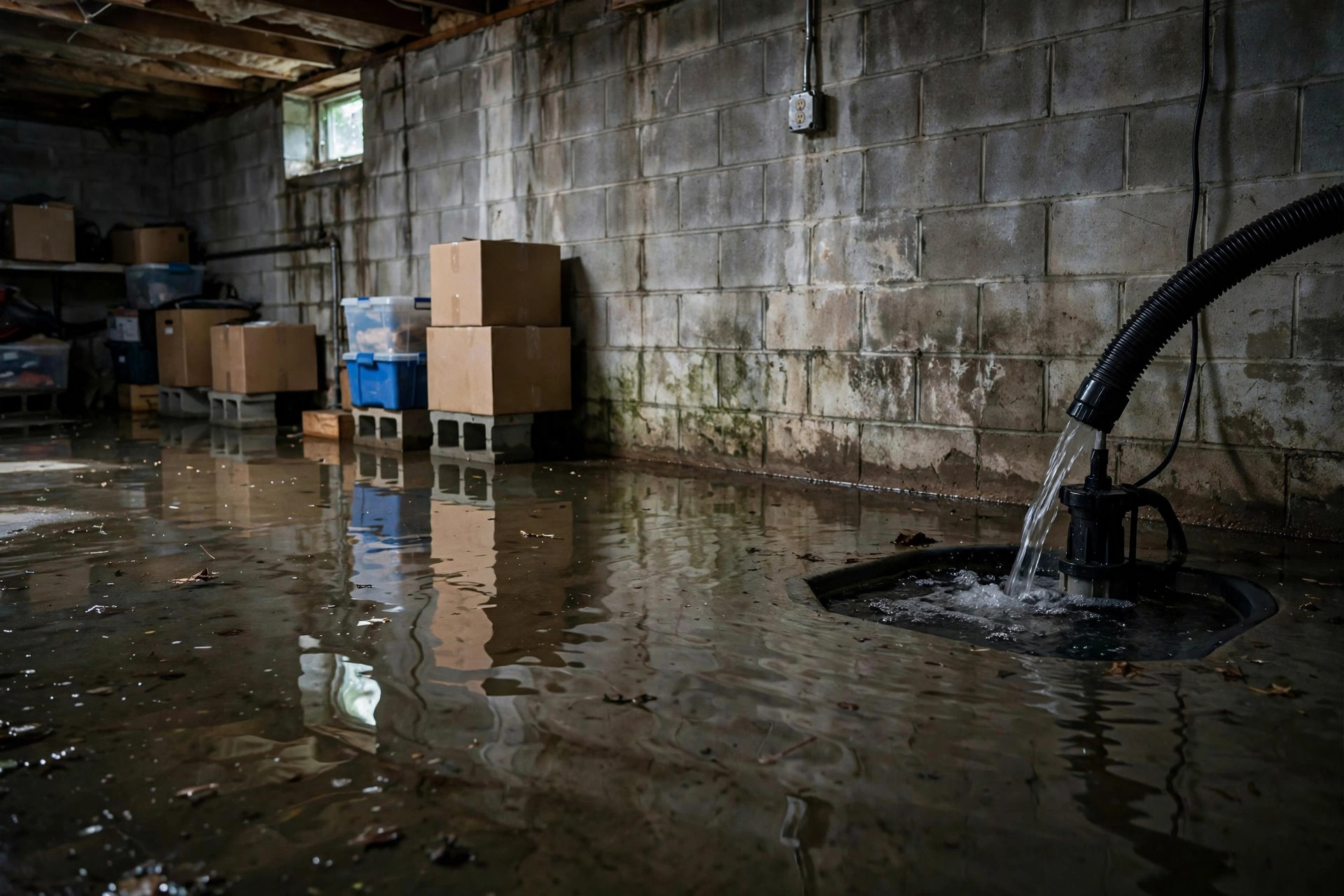
Sunday's storm dropped nearly 5 inches of rain on Bergen, Passaic, and Morris counties in hours — flash flood warnings, stranded cars in Paterson, road closures in Paramus and Oradell. When streets flood, basements are next. Here's your playbook, in order.
1. Stay out until the electricity is off
Floodwater conducts electricity, and a submerged outlet, appliance, or breaker panel turns your basement into a hazard. If you can reach your breaker box from dry ground, kill the basement circuits before you step in water. If water reached the panel itself, don't touch it — call an electrician.
2. Document everything before you touch anything
Before you move a single box, take photos and video of everything: the high-water line on walls, soaked flooring, damaged furniture, wet boxes, your sump pump and where it sits. Open drawers and closet doors and photograph inside. This documentation is the difference between a smooth insurance claim and a denied one. Save receipts for anything you buy for cleanup — pumps, fans, dehumidifier rentals — because many policies reimburse reasonable mitigation costs even when the water itself isn't covered.
3. Get the water out — but safely
A few inches of water with a working sump pump? Let it run and help with a wet-vac. But never pump a basement fully dry while the ground outside is still saturated — the pressure imbalance can crack your foundation. Pump down to a couple of inches, let the soil drain, then finish. Deeper water or a dead pump is a professional pump-out job.
4. Dry it fast — the 48-hour mold clock starts now
Damp drywall, carpet, insulation, and wood can start growing mold within 24-48 hours of a flood. Once the water's out: remove every soaked porous material (carpet, padding, wet drywall — cut 12-24 inches above the waterline), then run fans and a dehumidifier nonstop for days. In finished Wayne basements, pulling baseboards and drilling weep holes in drywall lets trapped water escape instead of feeding hidden mold.
Basement Flooded in Today's Storm?
Free post-storm inspection — pump test, grading check, and crack survey with a firm written price.
(973) 653-8456Tap to call now5. Know what to throw away
Anything porous that soaked up floodwater usually can't be saved: carpet padding, mattresses, upholstered furniture, cardboard, wet insulation — all curb-bound. Solid wood furniture can often be saved if dried quickly and disinfected. Hard surfaces — tile, concrete, metal — clean up with detergent and disinfectant. Food, medicine, and cosmetics that touched floodwater go in the trash, no exceptions.
6. Make sure the next storm doesn't do this again
Once you're dry, find out why the water came in. Test the pump: pour water in the basin — it should kick on, pump down, and shut off. If it's over 7 years old or struggled during this storm, replace it before the next one. Add a battery backup pump ($500-$1,000 installed) — a pump without backup is decoration during a power outage. Extend downspouts 6-10 feet from the house, fix grading that slopes toward the foundation, and if water seeped up through the floor or the wall-floor joint — the signature of groundwater pressure — an interior French drain tied to your sump pump is the permanent fix. We see this pattern every year in Passaic and Hackensack: homes that flood once flood again until the system is fixed.
Don't Wait for the Next Flood Warning
Free inspections across North Jersey — one firm price for the fixes that matter. Licensed & insured pros, 24/7 emergency service.
(973) 653-8456Tap to call nowStorm Basement Flooding FAQs
Is it safe to go into a flooded basement?
Not until the power is off. Floodwater conducts electricity, and submerged outlets, appliances, and breaker panels can be lethal. Kill the basement circuits from dry ground if you can; if water reached the panel, call an electrician before entering.
Will homeowners insurance cover storm flood damage?
Standard policies usually cover sudden damage like a burst pipe but exclude groundwater seepage and surface flooding unless you carry flood insurance or a sump pump failure rider. Document everything and call your agent before cleanup.
How fast does mold grow after a basement floods?
Mold can start colonizing damp drywall, carpet, and wood within 24-48 hours of a flood. Fast drying matters more than anything after the water is out — fans, dehumidifiers, and removing soaked porous materials quickly.
Can I pump out my own basement?
A few inches with a working sump pump or wet-vac, yes. Deeper water is a professional job — and never pump fully dry while the ground outside is still saturated, or pressure can crack the foundation.
How do I keep my basement from flooding in the next storm?
Get the system inspected: test or replace the sump pump, add battery backup for power outages, extend downspouts, fix grading. For chronic seepage, an interior French drain tied to the sump pump is the permanent fix.