NJ Sump Works Blog · Published September 14, 2026
Sunday's "Once-in-a-Generation" North Jersey Flood Just Tested Your Sump Pump — Here's How to Tell If It Passed
Short answer: Sunday's once-in-a-generation downpour was a live-fire test for your sump pump. Check whether it actually ran, look for water line marks, test the float switch, clear the discharge line — and if you lost power without a battery backup, fix that before the next storm. Here's the full five-point check.
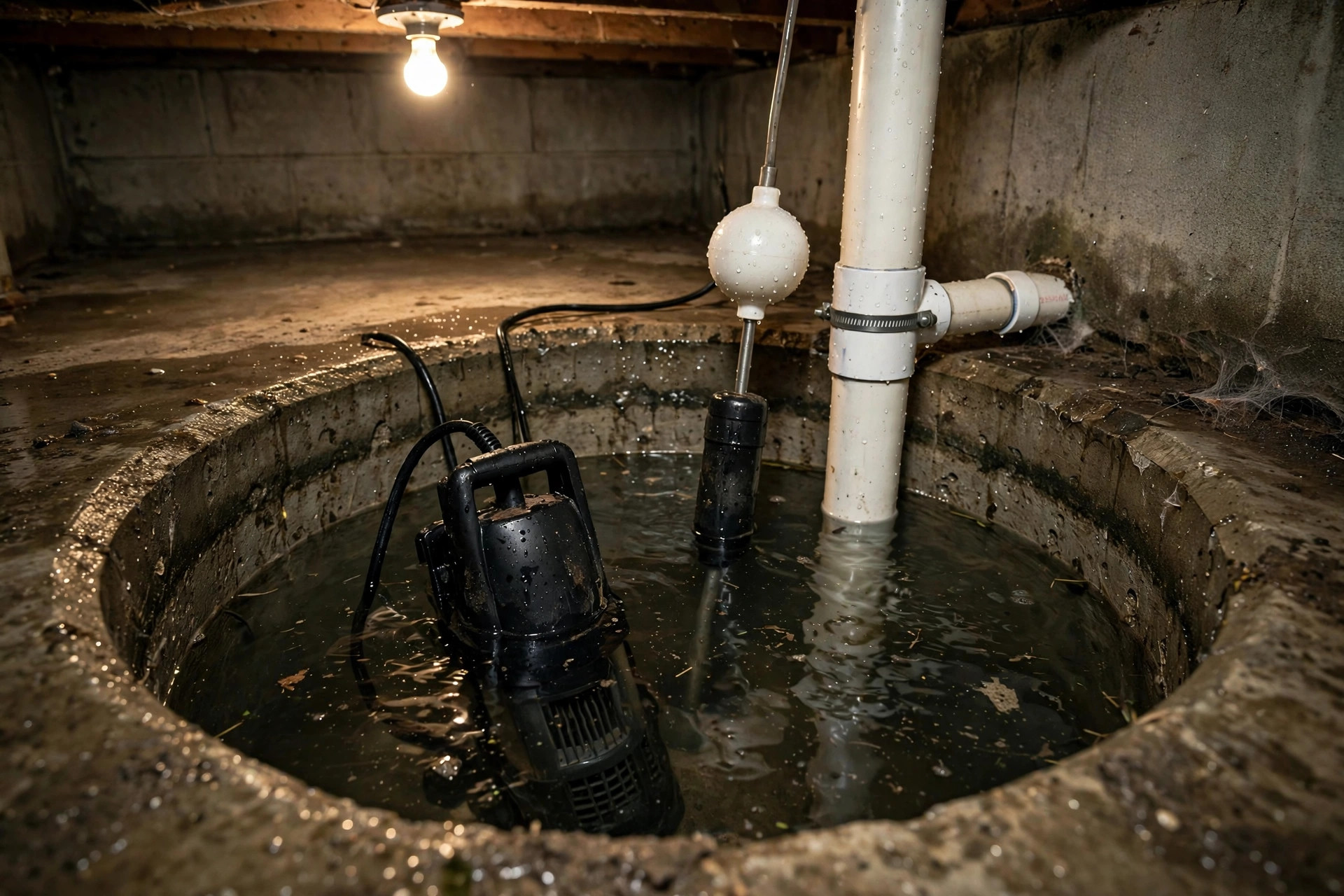
Sunday morning, North Jersey got hit with the kind of rain you only see once in a generation.
A stalled weather front parked itself over Bergen and Passaic counties on September 13 and just kept dumping. North Haledon picked up over 4 inches of rain in about three hours. Haworth, Little Falls, Fair Lawn, Garfield, Ridgewood, Paramus — flash flood warnings stretched across the whole area. In Paterson, cars were stuck in standing water and needed rescues. The state climatologist called it at least a once-in-a-generation event, with a return period of around 80 years.
If your house has a basement and a sump pump, Sunday was the real-world test nobody signed up for. Here's how to find out whether your pump passed — and what to do if it didn't.
First: Did It Even Run?
Go down to your basement and look at the sump pit. This is the most important check, and it takes two minutes.
- Pit is dry and the pump isn't running: Good sign. But ask yourself — did it run during the storm and clear the water, or did it never turn on at all? A pump that sat silent while the ground was saturated is not a pump you want to trust.
- Pump is still running days later: The water table is still high. That's normal after a storm this size, but keep an eye on it. If it runs nonstop for a week, that's a workload issue worth a professional look.
- Water line marks on the pit walls or floor: That's the bad news. The pump couldn't keep up or didn't kick on, and water got where it shouldn't. Even an inch of standing water is enough to soak carpet, drywall, and anything stored on the floor.
The Five Things That Fail During a Storm Like This
1. The float switch stuck.
This is the number-one reason sump pumps don't start when they should. The float can get wedged against the side of the pit or tangled in the power cord. After a big storm, debris washes into the pit and jams things up. Open the lid, make sure the float moves freely up and down.
2. The discharge line was clogged.
The exterior discharge pipe can get packed with leaves, mud, or silt — exactly what a flood pushes around. If the line's blocked, the pump runs and runs but the water goes right back into the pit. Walk outside and make sure the end of the pipe is clear and pointing at least 10 to 20 feet away from your foundation. We see this constantly in Wayne and Hackensack after heavy rain.
3. The check valve failed.
Hear a loud clunk every time the pump shuts off, or the pump cycling on and off every few seconds? That's a failing check valve — water is flowing back down into the pit, so the pump has to pump the same water over and over. It burns out motors fast. If you're hearing those symptoms, read up on the warning signs of a failing sump pump before the motor gives out.
4. The power was out.
The most common time a sump pump fails isn't a broken motor — it's a dead outlet. Storms knock out power exactly when the rain is heaviest. If all you have is a plug-in electric pump, a blackout means your basement has zero protection. This is the storm to make the case for a battery backup sump pump: a secondary pump with its own deep-cycle battery that keeps moving thousands of gallons even when the grid is down. Most backup batteries last 3 to 5 years — if yours hasn't been replaced since 2021 or so, assume it's not holding a real charge.
5. The pump was simply too old.
Sump pumps are machines with a lifespan, usually 7 to 10 years. Visible rust on the housing, loud humming or clanging, constant running — those are end-of-life signs. If your pump is over a decade old, Sunday's storm ran it harder than anything in years. It may have done the job this time and still be on its last legs.
Not Sure Your Pump Passed the Test?
Free sump pump check after Sunday's storm — we test the pump, float switch, check valve, discharge line, and backup battery.
(973) 653-8456Tap to call nowAfter the Flood: What Still Needs Attention
Even if your basement stayed dry, the work isn't over:
- Scoop out the pit. Storms wash silt, gravel, and debris into the pit. Clean it out so the next round of rain doesn't start with a half-clogged pump.
- Test the pump manually. Pour a bucket of water into the pit and watch it run a full cycle. If it doesn't kick on, or it sounds wrong, you just caught the problem before the next storm instead of during it.
- Sniff for trouble. A damp, musty smell in the basement means moisture got in somewhere, even if you can't see it. Mold starts growing in 24 to 48 hours.
- Check what you store down there. Cardboard boxes, holiday decorations, anything on the floor — water line marks on them tell the story even if the concrete looks fine.
And the forecast matters: after Sunday's drenching, the ground is saturated. The next decent rain doesn't have to be historic to cause problems — it just has to land on soil that has nowhere left to put it. If you want the bigger picture, read our guide on how to prevent basement flooding before that next storm shows up.
When to Call a Pro
You can do the bucket test and the visual checks yourself. But call a sump pump specialist if:
- The pump didn't run during Sunday's storm
- Water marks show flooding happened
- The pump is 7-plus years old or you don't know its age
- You have no battery backup and you lost power at any point
- The discharge line is buried, broken, or draining toward the house
- You want a second pump or an upgrade before the next big one
We Do Sump Pumps in Bergen and Passaic County — That's All We Do
NJ Sump Works installs, repairs, and replaces sump pumps across North Jersey — Paterson, Paramus, Fair Lawn, Garfield, Ridgewood, Hawthorne, North Haledon, Little Falls, Passaic, and the surrounding towns. Pump replacements, battery backup systems, discharge line work, pit cleanouts.
Sunday's storm was a wake-up call for a lot of basements. Don't wait for the next one to find out whether yours is ready.
Call for a Free Sump Pump Check
Free inspections across North Jersey — pump test, battery check, and discharge inspection. Licensed & insured pros, 24/7 emergency service.
(973) 653-8456Tap to call nowSump Pump Storm-Test FAQs
How do I tell whether my sump pump ran during the storm?
Look at the sump pit. A dry pit with a quiet pump can be a good sign — but only if it actually ran during the storm and cleared the water. Water line marks on the pit walls or floor mean it couldn't keep up or never kicked on. If you can't tell, pour a bucket of water into the pit: the pump should turn on, pump the water down, and shut off.
Why didn't my sump pump turn on during the flood?
The most common reason is a stuck float switch — debris from the storm can wedge the float against the pit wall or tangle it in the power cord. Other usual suspects: a tripped GFCI outlet, a failed check valve, a clogged discharge line, or a power outage with no battery backup.
What does a loud clunk or short on-off cycling mean?
That's a failing check valve. Water is draining back down the discharge line into the pit, so the pump re-pumps the same water over and over. It burns out motors fast — get the check valve replaced before it kills the pump.
Does a battery backup sump pump work during a power outage?
Yes — a battery backup system is a secondary pump on its own deep-cycle battery that keeps moving thousands of gallons when the grid goes down. Most backup batteries last 3 to 5 years; if yours hasn't been replaced since around 2021, assume it's not holding a real charge.
How old is too old for a sump pump?
Most sump pumps last 7 to 10 years. Visible rust on the housing, loud humming or clanging, and constant running are end-of-life signs. A pump over a decade old may have survived Sunday's storm and still be on its last legs — don't bet the next storm on it.