NJ Sump Works Blog · Published September 18, 2026
Another Soaking Weekend Is Headed for North Jersey — Is Your Sump Pump Ready?
Short answer: forecasters are warning of another soaking, multi-day rain event for North Jersey this weekend — and the ground is already saturated from September 13's flash floods. Give your sump pump five minutes of attention today, not when water is coming in under the door. Here's the full check.
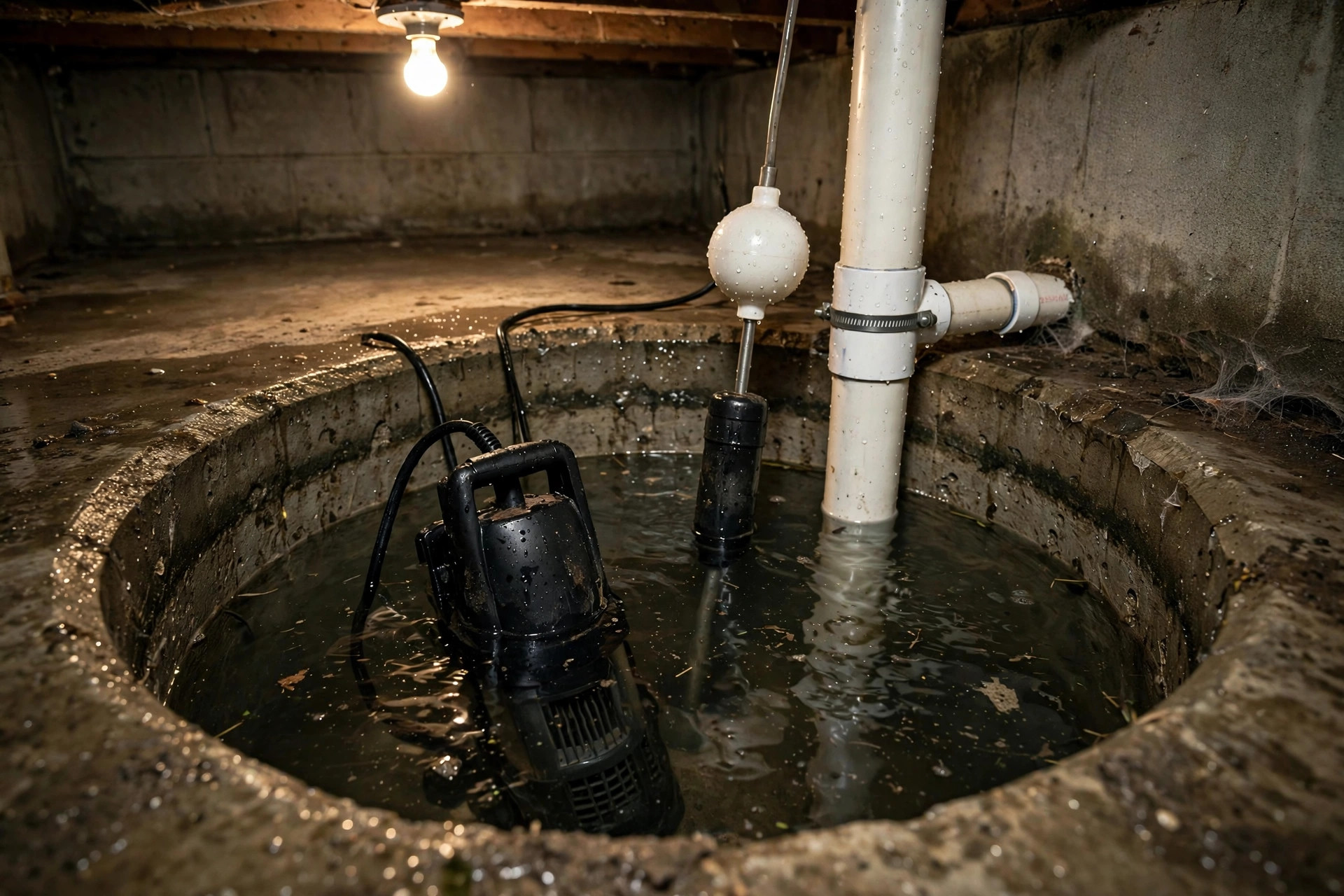
North Jersey basements have taken a beating this September, and it's not over yet. Forecasters are warning that another soaking, multi-day rain event is headed for the Northeast this weekend, with New York City and the I-95 corridor right in the path. Flash flooding is possible — and after last weekend's drenching, the ground around here is already saturated.
Last Sunday, September 13, was the warning shot. Flash flood warnings went up across Bergen, Essex, Hudson, Passaic, and Morris counties. Some parts of New Jersey and Connecticut saw 4 to 5 inches of rain in a matter of hours. I-80 ramps were closed. Thousands of homes lost power. If your basement stayed dry through that, count yourself lucky — but don't count on luck twice.
This is the exact moment to give your sump pump five minutes of attention. Not when water is coming in under the door. Now.
The 5-Minute Sump Pump Check
You don't need tools for this. Here's what to do:
1. Lift the float switch.
Open the pit cover and lift the float by hand. The pump should kick on within a few seconds and shut back off when the float drops. If nothing happens — or it runs constantly without stopping — that's your red flag. A stuck float is the number-one reason pumps don't start when they should; debris washes into the pit during storms and wedges the float against the pit wall or tangles it in the power cord.
2. Pour in a bucket of water.
A few gallons from a bucket simulates real conditions. The pump should cycle on, clear the water, and shut off. If it struggles, gurgles, or takes forever, the pump is weak or the discharge line is clogged. If it runs but the water level barely moves, read our guide on sump pump failure warning signs — you're looking at one.
3. Check the discharge line.
Follow the pipe outside. Make sure it's not blocked by mulch, leaves, or debris, and that it actually drains away from the foundation — not right back against the house. September leaves are already starting to fall, and a blocked discharge line turns a good pump into a useless one. We see this constantly in Wayne and Hackensack after heavy rain.
4. Look at the power.
Sump pumps die during storms for the dumbest reason: no electricity. Make sure the pump is plugged into a GFCI outlet that's actually working, and that the breaker hasn't tripped. Thousands of customers lost power during last weekend's storm — if yours goes out this weekend, a pump with no battery backup is just a paperweight.
5. How old is the pump?
A sump pump lives about 7 to 10 years. If yours is pushing a decade — or you don't know how old it is because it was there when you bought the house — you're running on borrowed time. They don't age gracefully. They fail all at once, usually during the worst storm of the year. And Sunday's storm ran every pump in Bergen and Passaic County harder than anything in years.
Not Sure Your Pump Is Up for This Weekend?
Free sump pump check before the rain — we test the pump, float switch, check valve, discharge line, and backup battery.
(973) 653-8456Tap to call nowThe Backup Question Nobody Asks Until It's Too Late
Here's the part most North Jersey homeowners learn the hard way: your sump pump is only as reliable as your power supply. Last weekend, thousands of customers across the state were without electricity Sunday morning. If your pump needs the grid and the grid is down, your basement is on its own.
A battery backup system kicks in automatically when the power fails and can pump hundreds of gallons on a charge. It's the single most important upgrade a homeowner in a flood-prone area can make — and it's a fraction of what one basement flood costs. Most people spend more cleaning up one flood than a backup system would have cost in the first place.
When to Call It In
Some of these checks are easy DIY. But call a professional if:
- The pump is 7+ years old or you don't know its age
- It runs but doesn't actually move water
- It cycles on and off rapidly (short-cycling), which burns out motors fast
- The pit fills faster than the pump can clear it
- You have no battery backup and your power flickers every storm
Basement flooding isn't just an inconvenience. It's ruined carpet, wrecked furnaces, dead water heaters, and mold that starts growing in 24 to 48 hours. In towns along the Passaic River — Little Falls, Fairfield, Wayne, parts of Paterson — homeowners know exactly how fast a basement can go from dry to swimming pool. If you want the bigger picture, read our guide on how to prevent basement flooding before the weekend.
Don't Wait for the Water
September has made one thing clear: the storms aren't done. With another heavy-rain weekend bearing down on Bergen, Passaic, and Hudson counties, a quick sump pump check today could save you thousands this weekend.
Call for a Free Sump Pump Check
Free inspections across North Jersey — pump test, battery check, and discharge inspection. Licensed & insured pros, 24/7 emergency service.
(973) 653-8456Tap to call nowWeekend Flood Threat FAQs
How do I test my sump pump before a storm?
Open the pit cover and lift the float switch by hand — the pump should kick on within seconds and shut off when the float drops. Then pour a few gallons of water from a bucket into the pit to simulate real conditions: the pump should cycle on, clear the water, and shut off.
What if my sump pump runs but doesn't move water?
The pump is either weak or the discharge line is clogged. Check the exterior pipe for mulch, leaves, or debris, and make sure it drains away from the foundation — not back against the house. If the line is clear and the pump still can't keep up, the pump itself is failing.
Does a battery backup sump pump work during a power outage?
Yes — a battery backup system is a secondary pump on its own deep-cycle battery that kicks in automatically when the grid goes down and can pump hundreds of gallons on a charge. Most backup batteries last 3 to 5 years; if yours hasn't been replaced in that window, assume it's not holding a real charge.
How old is too old for a sump pump?
Most sump pumps last 7 to 10 years. If yours is pushing a decade — or you don't know how old it is because it was there when you bought the house — you're running on borrowed time. Pumps don't age gracefully; they fail all at once, usually during the worst storm of the year.